


 +91-7827475131
 contact@femmenest.com
 IVF and Infertility
 Gynaecology
 Robotic Gynecology
 Laparoscopic Surgery
 Fetal Medicine
 Birthing
 Hysteroscopy



If irregular periods, sudden weight gain, acne, or trouble conceiving have been bothering you, you're not imagining it — and you're not alone. Polycystic Ovary Syndrome (PCOS) affects a large number of women of reproductive age, and it's one of the most common reasons women search for a gynecologist in the first place. At Femmenest, we offer structured PCOS treatment in Delhi that looks at the whole picture — your hormones, your fertility goals, and your day-to-day life — rather than just handing you a prescription and sending you home.
Quick takeaways
PCOS is a hormonal disorder in which the ovaries produce higher-than-usual levels of androgens (male hormones). This hormonal imbalance can interfere with ovulation, leading to irregular or missed periods, and is often associated with small fluid-filled sacs (follicles) that form along the edges of the ovaries.
PCOS doesn't look the same in every woman. Some have textbook symptoms; others have a milder version that's easy to miss for years. That's part of why getting an accurate diagnosis from an experienced gynecologist matters more than self-diagnosing from a symptom checklist.
If you'd like a deeper, more clinical explanation of how PCOS develops, our blog post on polycystic ovary syndrome goes into more detail.
Not every woman with PCOS experiences all of these, and severity varies a lot from person to person:
The exact cause of PCOS isn't fully understood, but research points to a combination of factors:
There's no single test for PCOS. A gynecologist typically arrives at a diagnosis using a combination of:
Getting these basics right is important, since several other conditions can produce similar symptoms. If your evaluation raises questions about your ovaries beyond PCOS, you may also want to read about ovarian cysts, which are sometimes confused with PCOS but are managed differently.
There's no one-size-fits-all PCOS treatment. A good treatment plan is built around your symptoms, whether you're trying to conceive, and your overall health. At Femmenest, treatment generally falls into a few categories:
This is usually the first line of management, especially for women with insulin resistance. Even a modest reduction in body weight (around 5–10%) has been shown to help restore more regular ovulation in some women. This includes:
We've written a more detailed, food-focused guide on our blog if you want practical meal ideas: PCOS diet plan: managing PCOD with food.
Depending on your symptoms and whether you're trying to conceive right now, your doctor may recommend:
PCOS is one of the leading causes of ovulatory infertility, but the outlook for conceiving is generally good with the right support. Depending on your case, your fertility specialist may recommend ovulation-induction medication alone, or move to procedures like IUI treatment if simpler approaches don't lead to pregnancy. In cases where these don't work or other fertility factors are involved, our IVF and infertility program offers a structured next step.
For a smaller group of women who don't respond to medication, a minor laparoscopic procedure called ovarian drilling may be considered to help trigger ovulation. This is generally not a first-line option and is reserved for specific cases after discussion with your doctor.
If you're comparing clinics and searching for the best PCOS doctor near me, here's what we'd want you to know about us:
We also manage related conditions that sometimes overlap with or get confused for PCOS, including endometriosis and broader concerns covered under general gynaecology, so you're not left wondering if you're seeing the right specialist.
Don't wait it out if you notice any of the following — earlier evaluation generally means simpler treatment:
PCOS is also associated with a higher long-term risk of type 2 diabetes, high cholesterol, and endometrial changes, which is part of why ongoing monitoring — not just a one-time diagnosis — matters.
Ready to take the next step? Book a consultation with our team and get a clear, personalized PCOS treatment plan.
Disclaimer: This content is for general informational purposes only and is not a substitute for professional medical advice, diagnosis, or treatment. Cost figures are indicative and based on prevailing market rates across the NCR region as of 2026; actual costs vary by individual diagnosis, treatment plan, and clinic. Please consult our fertility specialists for guidance specific to your situation.
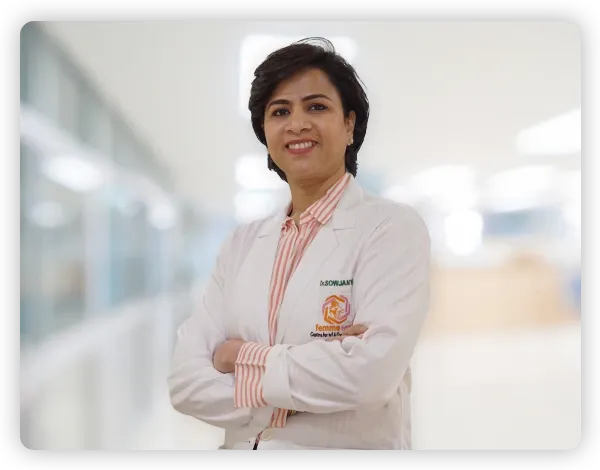
Director – IVF & Infertility, Laparoscopic & Robotic Gynae Surgery
Femme nest – Centre for IVF & Gynaecology
Max Super Speciality Hospital, Vaishali
Pushpanjali Medical Centre
 In-Vitro Fertilisation (IVF)
 Intrauterine Insemination (IUI)
 ICSI
ICSI PGS / PGD
 Male Infertility
 Laparoscopic Gynecology
 Robotic Gynecology
 General Gynecology
 Menopause
 Adolescent Care
 PCOS
PCOS Ovarian Cysts
 Fibroids
 Endometriosis
 Normal Delivery
 C-section Delivery
 High-risk PregnancyLow-risk Pregnancy
 Fetal Medicine
