


 +91-7827475131
 contact@femmenest.com
 IVF and Infertility
 Gynaecology
 Robotic Gynecology
 Laparoscopic Surgery
 Fetal Medicine
 Birthing
 Hysteroscopy


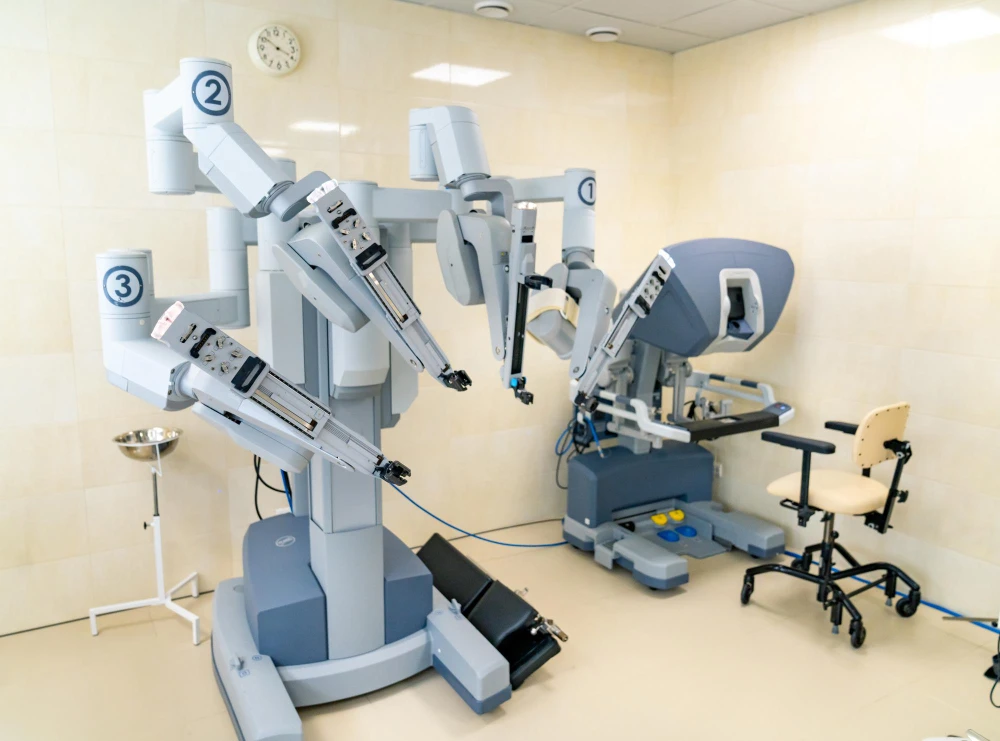
If your doctor has suggested surgery for fibroids, endometriosis, an ovarian cyst, or a hysterectomy, the word "surgery" alone can feel overwhelming. At Femmenest, we offer robotic gynaecology in Delhi as a way to treat these conditions through a few small incisions instead of a large surgical cut — meaning less pain, less scarring, and a faster way back to your normal routine for most women.
This page explains what robotic gynaecology actually involves, which conditions it can treat, what it costs in Delhi, and how to know if it's the right option for you.
Robotic gynaecology, also called robotic gynecologic surgery, is a form of minimally invasive surgery. Instead of operating directly with hand-held instruments, the surgeon sits at a console a few feet away and guides robotic arms fitted with tiny surgical instruments and a high-definition 3D camera. The instruments are inserted through four or five small incisions in the abdomen, each generally under 1–2 centimetres.
The robotic system doesn't operate on its own — every movement is initiated and controlled by the surgeon in real time. What it adds is a magnified, three-dimensional view of the surgical area and a wider, steadier range of motion than the human wrist alone can achieve, which is particularly useful in tight or deep areas of the pelvis.
Our team at Femmenest uses robotic-assisted techniques to manage a number of gynaecological conditions, including:
A few procedures make up most of what falls under robotic gynaecology:
Robotic hysterectomy — removal of the uterus, often recommended for large fibroids, abnormal bleeding, or certain cancers. You can read procedure-specific details on our robotic hysterectomy surgery cost in Delhi page.
Robotic myomectomy — removal of fibroids while preserving the uterus, an important option for women who want to retain fertility. More detail is available on our robotic myomectomy surgery cost in Delhi page.
Robotic excision for endometriosis — careful removal of endometrial tissue deposits, especially in deeper or hard-to-reach areas of the pelvis. See endometriosis surgery cost in Delhi for more.
Robotic ovarian cyst removal — removing a cyst while protecting healthy ovarian tissue as much as possible. Details are on our robotic surgery for ovarian cyst page.
Robotic surgery is one of several minimally invasive options, alongside laparoscopic gynaecology. Both use small incisions, but robotic systems add a magnified 3D view and instruments that can rotate and bend in ways that standard laparoscopic tools can't. This can be especially helpful for surgeries that require very precise movements in confined spaces, such as deep endometriosis excision or fibroid removal near sensitive structures.
That said, robotic surgery isn't automatically the better choice for every patient or every condition. Some cases are managed just as effectively with conventional laparoscopy, and a small number still require open surgery. Your gynaecologist will recommend the approach based on your specific diagnosis, the size and location of the issue, your overall health, and your fertility plans.
Compared with traditional open surgery, women who undergo robotic-assisted procedures generally experience:
These are general patterns seen across robotic gynaecologic surgery, not guarantees for every individual case — recovery still depends on the specific procedure and a person's overall health.
Most women are encouraged to walk around within a few hours of surgery to support recovery and reduce the risk of blood clots. A typical hospital stay is 1–2 days, and many patients return to light daily activities within a week to ten days, though this varies by procedure and individual healing. Strenuous activity, heavy lifting, and driving are usually restricted for a few weeks — your surgical team will give you a recovery timeline specific to your procedure.
As with any surgery, robotic-assisted procedures carry some risk, including infection, bleeding, or, rarely, injury to nearby organs. Discuss these risks with your surgeon as part of your decision-making process.
Don't wait for symptoms to become severe before seeking an opinion. Consider booking a consultation if you experience:
Femmenest brings together experienced gynaecologists and a dedicated surgical team for robotic-assisted procedures, with an approach centred on individualised diagnosis rather than a one-size-fits-all surgical plan. You can read more about our consultants' qualifications and experience on our team page. Every recommendation for robotic surgery is made only after a thorough evaluation of your condition, history, and goals — including fertility plans where relevant.
If you're exploring options for fibroids, endometriosis, an ovarian cyst, or another gynaecological condition, our team at Femmenest can help you understand whether robotic gynaecologic surgery is right for you. Get in touch with us to schedule a consultation.
Disclaimer: This content is for general informational purposes only and is not a substitute for professional medical advice, diagnosis, or treatment. Cost figures are indicative and based on prevailing market rates across the NCR region as of 2026; actual costs vary by individual diagnosis, treatment plan, and clinic. Please consult our fertility specialists for guidance specific to your situation.

Director – IVF & Infertility, Laparoscopic & Robotic Gynae Surgery
Femme nest – Centre for IVF & Gynaecology
Max Super Speciality Hospital, Vaishali
Pushpanjali Medical Centre
 In-Vitro Fertilisation (IVF)
 Intrauterine Insemination (IUI)
 ICSI
ICSI PGS / PGD
 Male Infertility
 Laparoscopic Gynecology
 Robotic Gynecology
 General Gynecology
 Menopause
 Adolescent Care
 PCOS
PCOS Ovarian Cysts
 Fibroids
 Endometriosis
 Normal Delivery
 C-section Delivery
 High-risk PregnancyLow-risk Pregnancy
 Fetal Medicine
